Bow Shackle vs D Shackle: How to Choose
Bow Shackle vs. D Shackle: How to Choose the Right Shackle and Pin Type
What You Will Learn Reading This Article
- When a bow shackle is the right answer and when a D shackle is stronger
- The four common pin types and which belong in permanent versus temporary connections
- What markings to look for and when a shackle comes out of service
The Two Shapes, Side by Side
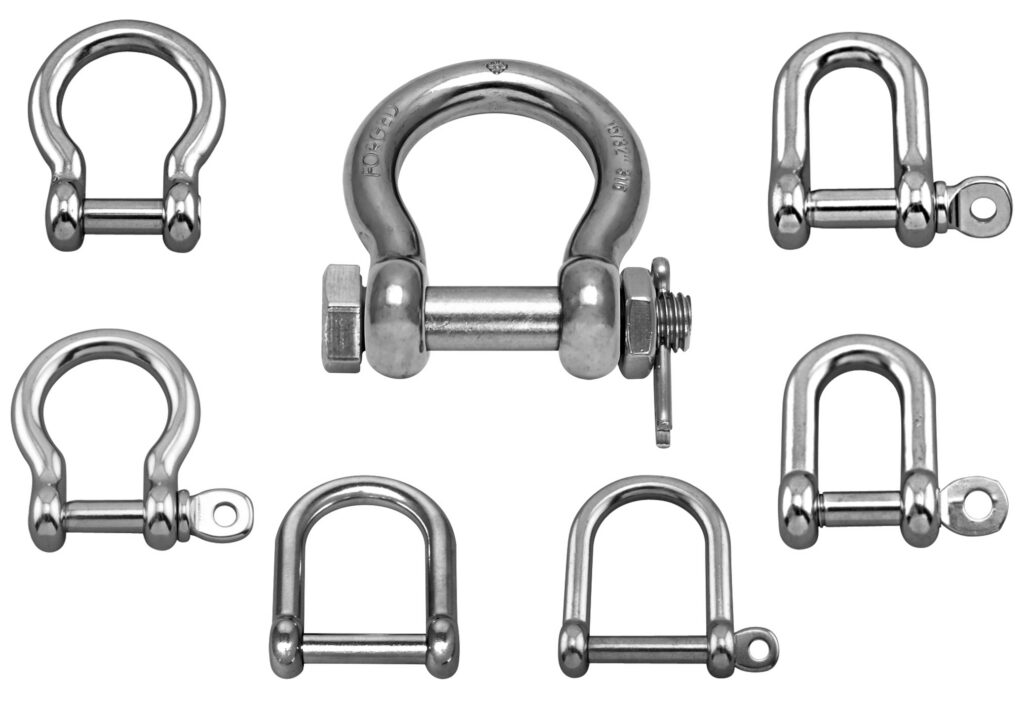
A bow shackle, also called an anchor shackle, has a rounded body that widens out from the pin. A D shackle, also called a chain shackle, has a narrow body with roughly parallel sides. Both make a removable connection. They differ in how they handle the load once it is made.
| Bow shackle | D shackle | |
| Body shape | Wide and rounded | Narrow with parallel sides |
| Strength for a given size | Lower for the same size | Higher when loaded in line |
| Multiple sling legs | Yes, the wide bow accommodates them | No, not intended for it |
| Angled loading | Tolerates some angle | Intended for straight in-line pull |
| Typical use | Anchoring, multi-leg lifts, marine rigging | Chain connections, straight pulls, tie-downs |
| Common pin styles | Screw pin, bolt type, captive pin | Screw pin, round pin, bolt type |
What the Shape Trade-Off Actually Means
The D shackle is stronger for its size because its narrow geometry keeps load concentrated along a single line, so the material is working as efficiently as possible. Introduce an angle, and that efficiency disappears quickly.
The bow shackle trades some of that efficiency for versatility. The wider body spreads load across a larger radius, letting it accept more than one sling leg and tolerate loading that is not perfectly in line.
Choose the D when the load is a straight pull, and you want maximum capacity from the smallest part. Choose the bow when more than one thing connects to it, or when the direction of pull will vary.
Pin Types and When Each One Belongs
Pin style matters as much as body shape, and it is where most misapplication happens. Across the stainless steel shackles range, you will find four common designs.
Screw Pin
The pin threads into the body and is removed by hand, which makes it the default for temporary rigging. The weakness is that vibration, rotation, or a load moving against the pin can unthread it. Screw pin shackles are not appropriate for connections left unattended or in place long-term unless the pin is secured.
Round Pin
The pin is held by a cotter pin rather than threads, so it cannot unthread. Round pin shackles suit tie-downs and similar work and are not designed for lifting.
Bolt Type
A bolt through the body with a nut and a cotter pin. This is the choice for permanent installations and anywhere the shackle is left unattended. It cannot loosen itself, and it tolerates load rotation that would back a screw pin out.
Captive Pin
The pin stays attached to the body so it cannot be dropped or lost during connection, on a boat deck or over water, which is a practical advantage.
A related design worth knowing is the no-snag pin, which sits flush with the body so no edge protrudes for a line or sail to catch on. Where fabric or rope passes near the hardware, a snag point is a wear point.
Load Direction and Side Loading
A shackle is designed to be loaded along its centerline, from the crown to the pin. Loading it at an angle is called side loading, and it reduces capacity. The greater the angle, the greater the reduction. Manufacturers publish derating information, and if your application involves an angled load, you need that data for the specific shackle.
The pin needs particular attention. A load bearing against it and able to move will rotate it, and a rotating screw pin unthreads. If the connection is loaded through the pin and any movement is possible, use a bolt-type shackle. The bow tolerates angle better than the D, but tolerance is not permission. Neither shape is designed to be loaded sideways.
Working Load Limit and Rated Capacity
Working load limit is the maximum load the shackle is rated to carry in normal service, assigned by the manufacturer. It already includes a design factor, the margin between rated load and failure, which exists to absorb what a calculation does not capture. It is not spare capacity available for you to use.
Rate the whole assembly, not the shackle alone. If the shackle is rated well above your load but the pad eye it connects to is not, the assembly is limited by the pad eye. Our article on why working load limits are crucial covers how that logic runs through a complete rigging assembly.
Shock loading deserves a warning of its own. A load dropped, jerked, or arrested suddenly generates forces far above its static weight and can exceed the capacity of hardware that looked to have ample margin. Check the published rating for the exact part number and size you are buying.
Markings, Traceability, and Inspection
A shackle intended for rated use should carry identification on the body: manufacturer, size, and working load limit. In material handling work covered by OSHA regulations, shackles must carry legible identification of their rated load and must not be loaded beyond it. A shackle whose markings have worn away cannot be verified and should not be used in a rated application.
Inspect before use. Take a shackle out of service if you find a bent or stretched body, a pin that does not seat or turns hard, visible wear at the crown or pin, cracks, gouges, heat damage, or pitting corrosion on a load-bearing surface. Never modify a shackle, since welding, heating, or grinding changes the material properties and voids the rating.
Grade and Finish
For marine and coastal work, grade 316 is the standard specification because of its chloride resistance, and 304 performs well inland and indoors. In architectural installations, the shackle is often visible, so finish and consistency across a run matter alongside function.
One practical note: stainless shackle pins gall readily. Clean threads and an anti-seize compound stop a screw pin from locking solid on any connection you intend to open again.
A Selection Checklist
- Will more than one component connect, or will load direction vary? If yes, use a bow shackle. If it is a straight in-line pull, use a D Shackle.
- Will the connection be left unattended or subject to vibration? If yes, use a bolt-type pin.
- Can the load rotate the pin? If yes, do not use a screw pin.
- Will lines or fabric pass close to the hardware? If yes, consider a no-snag design.
- Is every component in the assembly rated for your load, and is salt present in the environment?
Choosing With Confidence
The bow versus D question is the easy part. Use a bow where load direction varies or multiple legs connect, and a D where the pull is straight and you want the most capacity from the smallest part.
The decisions underneath it carry more weight. Match the pin type to whether the connection is temporary or permanent, keep the load in line, confirm the rating against the whole assembly, and retire any shackle whose markings you cannot read. Those habits are what make either shape safe.
SUNCOR STAINLESS: THE LEADING MANUFACTURER OF STAINLESS STEEL HARDWARE AND COMPONENTS.
To learn more about the world’s most complete and highest quality sources for stainless steel hardware and custom parts – visit our Suncor Stainless website. This Plymouth, MA-based company offers a variety of the highest quality stainless steel hardware for industrial, marine, architectural, commercial, government, and OEM markets.
For more information on our stainless steel hardware and custom parts, you may contact Suncor Stainless at 1-800-394-2222 or by completing the Contact Us Form.
Frequently Asked Questions
No. For a given size, a D shackle is stronger when the load runs straight through it. The bow shackle trades some of that capacity for the ability to accept multiple sling legs and angled loading.
Use a bolt type whenever the connection is permanent, will be left unattended, or is subject to vibration or load rotation. A screw pin can unthread under those conditions.
Side loading reduces the rated capacity, and how much depends on the angle. If your application involves angled load, get the manufacturer’s derating information for that specific shackle rather than estimating.
It identifies the manufacturer, the size, and the working load limit. If those markings are worn away, the rating cannot be verified, and the shackle should not be used in a rated application.
Only when the manufacturer states that the specific part is rated for lifting, confirm the published rating for the exact part number rather than assuming it from the material or size.